

DANIELA RHODES
UNIVERSITY OF CAMBRIDGE / NANYANG TECHNOLOGICAL UNIVERSITY,
UNITED KINGDOM
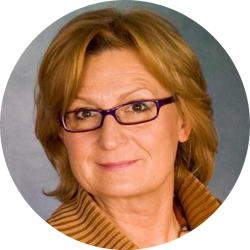
Daniela Rhodes is an Italian molecular and structural biologist. She earned her PhD at Cambridge under Nobel laureate Aaron Klug. By determining the nucleosome crystal structure, she contributed to understanding chromatin, gene regulation, and epigenetics. She has also studied protein–DNA complexes and telomeres, including their roles in aging and cancer. Since 2011, she has been a professor at Nanyang Technological University, Singapore, and previously served as Director of the Nanyang Institute of Structural Biology. Her work has been recognized with honors including Royal Society membership (2007) and the WLA Prize (2023).
CSABA PÁL
HUN-REN BIOLOGICAL RESEARCH CENTRE, HUNGARY
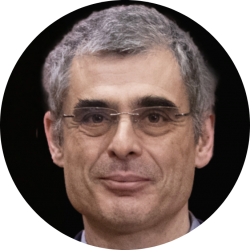
Csaba Pál is an evolutionary biologist and senior researcher at the Szeged Biological Research Centre of HUN-REN, as well as a corresponding member of the Hungarian Academy of Sciences. He is internationally recognized for his research on antimicrobial resistance. His work focuses on the evolution of antibiotic-resistant bacteria, the genetic basis of drug effects, and the development of novel combination therapies, using laboratory evolution and computational systems biology approaches. His results have been published in leading journals, including Nature and Science, and his contributions have been recognized with numerous awards, including the Szent-Györgyi Talentum Prize (2014).
JACK SZOSTAK
UNIVERSITY OF CHICAGO, UNITED STATES
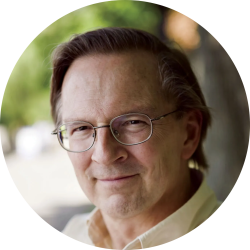
Jack W. Szostak is a Canadian-American chemist and biologist, formerly Professor at Harvard Medical School, and currently Professor of Chemistry and director of the Center for the Origins of Life at the University of Chicago. He conducted pioneering research on genetic recombination and telomere function, and created the first artificial yeast chromosome. Szostak was awarded the Nobel Prize in Physiology or Medicine (2009) for the discovery of how telomere length is maintained by the enzyme telomerase. Since 2020, his research has focused on the origins of life through studies of protocell growth and division, and the chemical replication of the primordial genetic material.
REIKO KURODA
UNIVERSITY OF TOKYO / CHIBA INSTITUTE OF TECHNOLOGY, RIKEN, JAPAN
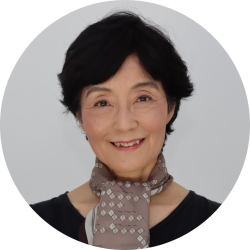
Reiko Kuroda is a Japanese chemist and biologist, Principal Research Scientist at Center for Radical Transformation, Chiba Institute of Technology and Professor Emerita at the University of Tokyo. In 1992, she became the first female full professor in the natural sciences at the University of Tokyo. She has conducted pioneering research on chemical and biological asymmetry and chirality, particularly on the genetic basis of shell coiling in snails. She has authored over 355 publications and her work has been recognized with numerous prestigious awards, including the L’Oréal–UNESCO Women in Science Award. Reiko is a foreign member of the Royal Swedish Academy of Sciences.
OMAR YAGHI
TSINGHUA UNIVERSITY, BEIJING, CHINA
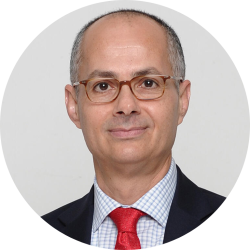
Omar M. Yaghi is a Xinghua distinguished chair professor of chemistry and chemical engineering at Tsinghua University, founder of AIMATRY and Yaghi Science Initiative. His work has fundamentally transformed chemistry and materials science: research in metal–organic frameworks and reticular chemistry has led to highly porous materials crucial for energy, environmental, and industrial applications. These materials can be used for gas storage, carbon capture, and water extraction from air. Yaghi is one of the world’s most cited chemists and was awarded the Nobel Prize in Chemistry (2025), along with numerous other prestigious international honors.
EDIT BUZÁS
SEMMELWEIS UNIVERSITY, HUNGARY
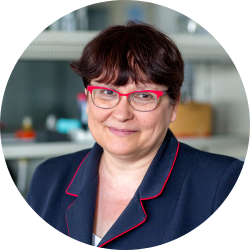
Edit Buzás is a Széchenyi Prize–winning physician, immunologist, and professor, and Director of the Institute of Genetics, Cell and Immunobiology at Semmelweis University. Her research focuses on autoimmunity and the biology and therapeutic applications of extracellular vesicles, and she is internationally recognized in this field. She received the ISEV Special Achievement Award (2020) and served as President of the International Society for Extracellular Vesicles from 2022 to 2024. Her work has been honored with numerous prestigious awards, including the Széchenyi Prize (2019).
TIM HUNT
FRANCIS CRICK INSTITUTE, UNITED KINGDOM
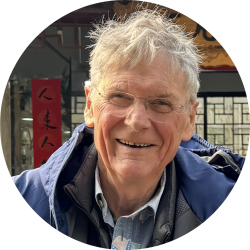
Sir Tim Hunt is a British Nobel Prize–winning biochemist who earned his degrees at the University of Cambridge. His research focused on the regulation of cell division, and in 1982 he discovered cyclins, which play a key role in cell cycle control and the understanding of cancer. He was awarded the Nobel Prize in Physiology or Medicine (2001) for this discovery. Hunt has received numerous prestigious honors and was knighted in 2006.
ROBERT LANGER
MASSACHUSETTS INSTITUTE OF TECHNOLOGY, UNITED STATES
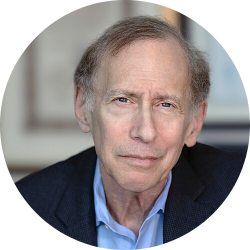
Robert Langer is an Institute Professor at MIT and a pioneer in controlled drug delivery and tissue engineering. He has published over 1,600 articles, cited more than 460,000 times, and holds over 1,500 patents, many of which have been applied in pharmaceutical and biotech companies, including his involvement in founding Moderna. Langer has received more than 220 prestigious awards, including the National Medal of Science and the Millennium Technology Prize.
DINSHAW PATEL
MEMORIAL SLOAN KETTERING CANCER CENTER, UNITED STATES
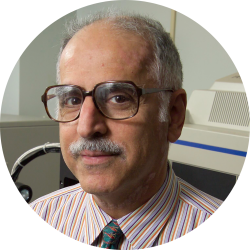
Dr. Dinshaw J. Patel is an Indian-American structural biologist and Abby Rockefeller Mauzé Chair of Experimental Therapeutics at Memorial Sloan Kettering Cancer Center in New York. Before joining MSKCC in 1992, he worked at AT&T Bell Laboratories and Columbia University. His research pioneered structural studies of nucleic acids and protein–nucleic acid complexes, leading to major discoveries in telometric G-quadruplex DNA, RNA interference, epigenetics, cGAS-STING pathway, and CRISPR–Cas systems. His current interests are in mechanisms underlying the diversity of bacterial antiphage defense systems and its implications for metazoan innate immunity. He was elected to the U.S. National Academy of Sciences (2009) and the American Academy of Arts and Sciences (2014).
YAMUNA KRISHNAN
UNIVERSITY OF CHICAGO, UNITED STATES
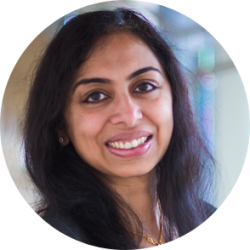
Yamuna Krishnan is a pioneer of DNA-based nanotechnology and currently
serves as the Louis Block Professor of Chemistry at the University of
Chicago. During her PhD in Bangalore, India, she investigated the
self-assembly of lipids, followed by postdoctoral research at Cambridge,
where she turned to the self-assembly of DNA. At the NCBS in India, she
developed a prototype DNA nanodevice capable of measuring ions within
organelles. After establishing her laboratory in Chicago, she further
refined and expanded this technology to DNA-based sensors for
quantitative chemical imaging of living systems. Her work has been
recognized with numerous prestigious awards, including the Shanti Swarup
Bhatnagar Prize for Chemical Sciences, the Infosys Prize in Physical
Sciences, the Sun Pharma Award for Basic Medical Research, the Ono
Pharma Breakthrough Science Award, and the NIH Director’s Pioneer Award.